top of page

Do you ponder your own mortality? Are you afraid of death?


These are weighty questions, but Jeff Bezos has the answer: "No. I used to be afraid of death. I did. I remember as a young person being very scared of mortality, didn't want to think about it...And as I've gotten older...somehow that fear has gone away." 


He went on to add: "I would like to stay alive for as long as possible, but I'm really more focused on health span. I want to be healthy...I don't want the long decay...I have a lot of reasons to stay around, but mortality doesn't have the effect on me that it did maybe when I was in my twenties."


Coincidentally, this matches the message of my book, The Journey's End: An Investigation of Death and Dying In Modern America. Like Bezos, The Journey's End embraces the health span concept, and opposes the "long decay" that our modern medical system pushes on patients.


In our cynical age, this kind of honest introspection about mortality is exactly what's needed. Fortunately, my book is available on Amazon. I'm sure Jeff Bezos would approve! 


The Editorial Board of Scientific American (the oldest continuously published magazine in the US) recently chose to comment on the unfortunate state of hospice care. The Editorial observes that “corporate profiteers have taken over end-of-life care… [and this care] is failing people in their greatest moment of need…For-profit hospices do a significantly worse job of providing care than nonprofit agencies according to a study by the RAND corporation.” The article also cites a major study by ProPublica published in the New Yorker that exposed numerous and large-scale hospice abuse by for-profit (FP) hospices. This research is especially concerning when one realizes that 75 percent of US hospices are owned by FP agencies. Over the last decade, non-profit hospice agencies have struggled financially, resulting in the aggressive takeover of these hospices by the FP sector. The reason FP hospice does so well in this sector is a function of their skill at manipulating the complex hospice regulatory system to make profits.


Unfortunately, the Editorial Board’s recommended solution is to have “Policy makers better regulate this vital service.” More regulation is not the answer to these problems. The solution is to change the economic incentive for hospice. The right incentives will minimize the need for regulation and drive the right results. The true source of the “hospice problem” is the Medicare payment system which because of its needless complexity and volume bias encourages profiteering and fraud and abuse. A simple solution would be to reimburse hospice care on a simple cost-plus basis allowing for a modest 2-3 percent margin. This payment model would improve patient care because coding, technical documentation, patient mix and volume are no longer important - caring for the patient is the sole focus/incentive. Hospice services are not complex or expensive - they are labor driven and low tech. These services do not justify a complex payment model. Furthermore, these new incentives would not be attractive to the FP sector because large margins are no longer a possibility.


More details surrounding these recommendations are available in my new book, The Journey’s End.


ree


As USA Today reports, the entire Social Security cost of living adjustment (COLA) boost for 2024 will be canceled out. The culprit? Higher healthcare premiums.


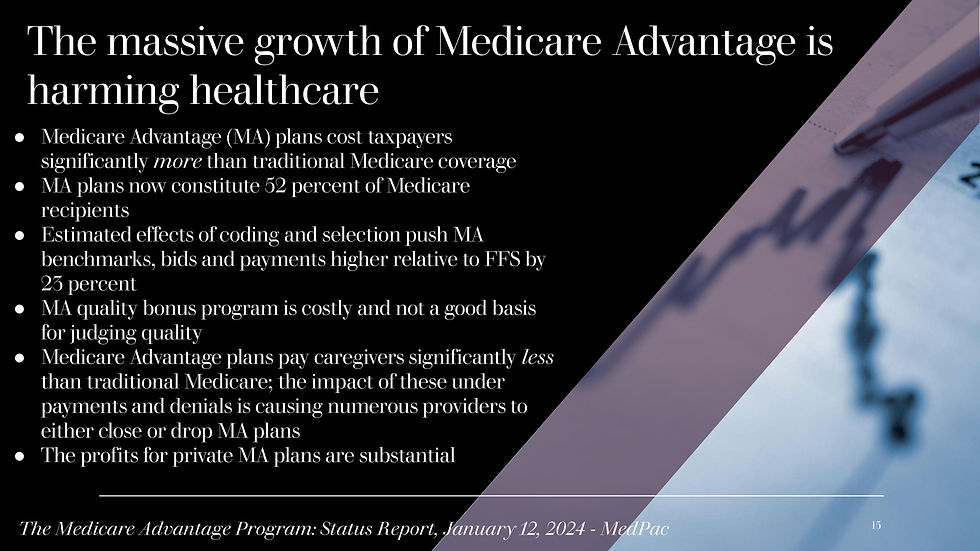
In January, more than 66 million Americans on Social Security will receive a COLA of 3.2 percent, which is roughly $50 per person (or $100 for a couple). Unfortunately, as the article explains, Medicare premiums are projected to increase at over $100 per month.


Simply put, the Social Security COLA is canceled out by higher Medicare costs---and many seniors are concerned. As Mary Johnson, a Social Security and Medicare analyst, explains: “Worry that retirement income won’t be enough...is a top concern.”


And yet, meaningful reform to Medicare (or even healthcare in general) is not a high priority for policy makers. One reason it is not a priority is that they are not willing to consider real solutions.


The 3 greatest problems in healthcare are:

  1. Quantity over Quality: A system that only rewards quantity (the volume of services) but not quality (caring for patients)

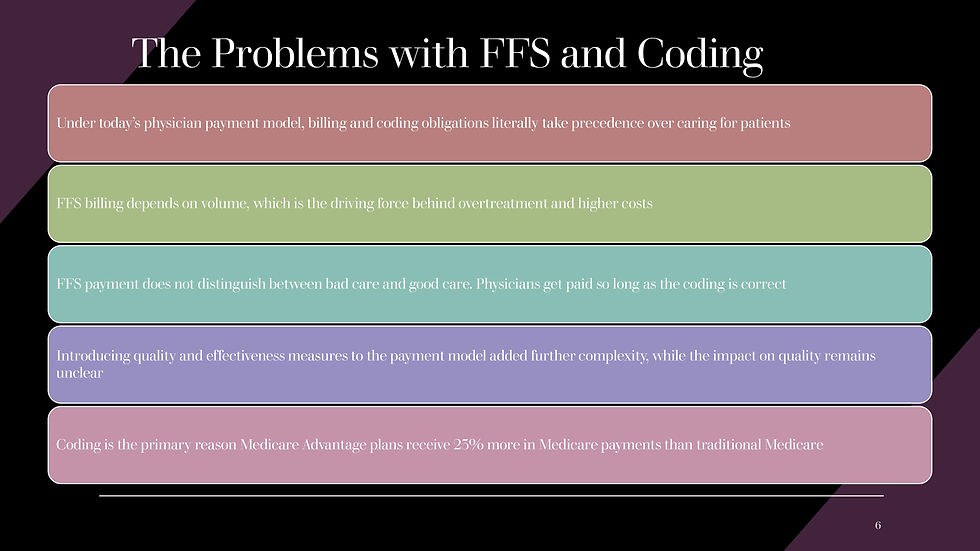
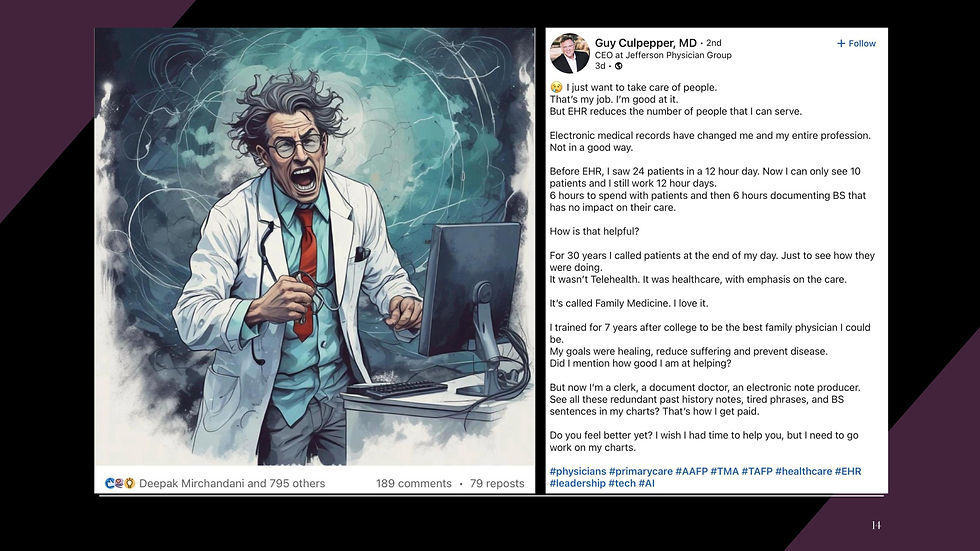
  2. Coding: Medical coding is fundamentally flawed. It does not value conversations or compensate for coordinating care. Consequently, fragmented care is the norm.

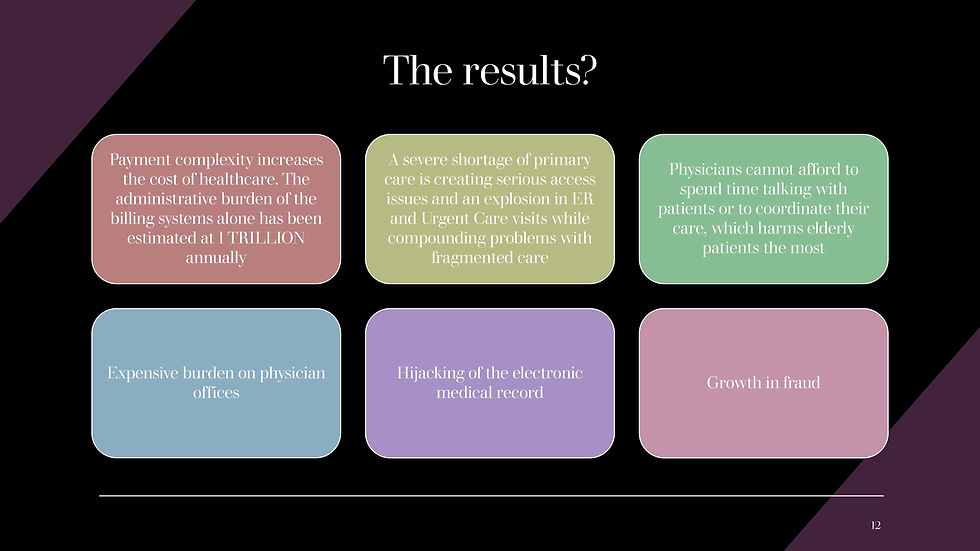
  3. Overtreatment at end-of-life: We waste billions of dollars overtreating the elderly. What's worse is this "care" often causes unnecessary pain and suffering.

My book, The Journey's End, is a roadmap to help policymakers, physicians, and regular people navigate these challenges. Importantly, it offers pragmatic and implementable solutions to these 3 greatest problems in healthcare.


ree


Get in Touch

  • Linkedin

Thank you for your message!

bottom of page